
TELANGIECTASIA
Medical Sclerotherapy
Precision treatment for spider veins and small varicose veins
What is sclerotherapy?
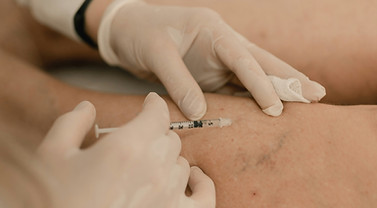
Sclerotherapy is a minimally invasive medical procedure used to treat spider veins (telangiectasia) and small varicose veins (reticular veins). It involves the precise injection of a specialised solution directly into the affected vein, causing it to collapse, seal, and gradually be reabsorbed by the body.
Commonly used sclerosants include agents such as Polidocanol and Sodium tetradecyl sulfate.
How does it work?
Verified mechanism (vascular and dermatologic literature):
-
The injected solution irritates the endothelial lining of the vein
-
This leads to controlled inflammation and fibrosis
-
The vein collapses and is eventually replaced by connective tissue
-
Blood is naturally redirected to healthier surrounding veins
Clinical result:
-
Gradual fading and disappearance of visible veins
-
Improved skin clarity and uniformity
-
What types of veins can be treated?
-
Spider veins (fine, superficial red or blue vessels)
-
Reticular veins (slightly larger blue/green veins)
-
Residual veins following previous vein treatments
Important limitation (clinical fact):
Sclerotherapy is not suitable for large varicose veins or underlying venous insufficiency without prior vascular assessment.
Treatment areas
-
Legs (most common)
-
Thighs
-
Calves
-
Ankles
What does the procedure involve?
-
Performed using very fine needles
-
Small volumes of sclerosant injected into targeted veins
-
Typically 15–30 minutes per session
-
No anaesthesia required in most cases
Aftercare and recovery
Standard post-treatment protocol (evidence-based practice):
-
Compression stockings recommended for several days to 1–2 weeks
-
Walking is encouraged immediately after treatment
-
Avoid strenuous exercise, hot baths, and sun exposure for a short period
When will I see results?
-
Initial improvement: within 2–4 weeks
-
Continued clearing: up to 8–12 weeks
-
Multiple sessions are often required for optimal results

Safety and considerations
Well-established medical procedure with a strong safety profile when performed correctly.
Common side effects:
-
Mild swelling, redness, or bruising
-
Temporary pigmentation (brown lines or spots along treated veins)
Less common but important risks:
-
Matting (fine new vessel formation)
-
Ulceration (rare, usually related to injection technique)
-
Allergic reaction (very rare)
Who is a suitable candidate?
-
Patients with visible spider or small varicose veins
-
Those seeking a non-surgical, clinically proven solution
-
Individuals without significant underlying venous disease (or after appropriate vascular evaluation)
Important clinical perspective
Sclerotherapy is considered the gold standard treatment for spider veins in many clinical guidelines (including vascular surgery and dermatology consensus statements), provided that appropriate patient selection and technique are followed.
Medical sclerotherapy is a safe, effective, and evidence-based treatment for spider and small varicose veins, offering gradual but significant improvement in skin appearance through targeted vascular treatment.